

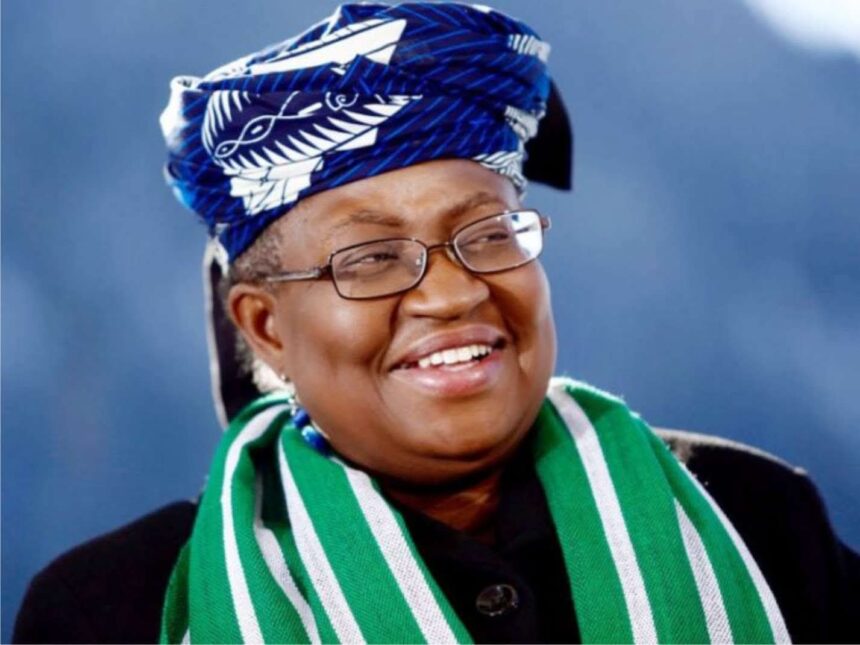
Director-General of the World Trade Organisation (WTO), Dr. Ngozi Okonjo-Iweala, has attributed Nigeria’s successful negotiation of the historic $30 billion Paris Club debt relief to a deliberate communication strategy that helped secure public understanding and support for the economic reforms implemented under former President Olusegun Obasanjo’s administration.
Speaking on Wednesday in Abuja at the public presentation of The Pain and the Promise, a book by communications expert and public affairs analyst Paul Nwabuikwu, Okonjo-Iweala reflected on her tenure as Minister of Finance and the reforms that paved the way for the debt deal.
She recalled that she was recruited from the World Bank in 2003 to restore Nigeria’s public finances and negotiate the elimination of the country’s debt owed to the Paris Club of creditors.
According to her, the reform programme demanded difficult policy decisions and public sacrifices, making effective communication a critical component of the government’s strategy.
To achieve this, she said, Nwabuikwu was brought into the economic team to explain the reforms to Nigerians in clear and simple language.
Okonjo-Iweala described him as an exceptional communicator whose work helped build public confidence in the reform agenda, adding that the programme would not have achieved the same level of success without a well-coordinated communications effort.
She stressed that successful reforms in a democracy require more than policy implementation, noting that governments must persuade citizens, explain policy trade-offs and build trust to sustain difficult decisions.
The WTO chief also expressed concern over Nigeria’s persistent ethnic, religious and regional divisions, warning that they continue to slow national development.
She said the country must forge a broad national consensus that transcends sectional interests and ensures continuity in key policies regardless of changes in government.
She further urged Nigerians to prioritise competence over ethnic or regional considerations, maintaining that every part of the country is endowed with talented individuals capable of delivering results.
Reviewing The Pain and the Promise, Okonjo-Iweala described the 300-page publication as a compelling account of Nigeria’s political, economic and social evolution over the past 35 years.
She recommended the book to young Nigerians as a valuable resource for understanding the country’s history and present-day challenges.
Nigeria reached a landmark agreement with the Paris Club in 2005, securing about $18 billion in debt relief approximately 60 percent of its nearly $30 billion bilateral debt.
The debt relief arrangement was concluded during the Obasanjo administration and fully implemented on April 21, 2006.
Also speaking at the event, former Minister of Aviation Osita Chidoka said Nigeria needs constructive critics who understand governance, public officials who embrace accountability and citizens committed to bridging the gap between government and the people.
He added that despite the country’s challenges, its greatest strength remains the resilience and creativity of its citizens.