
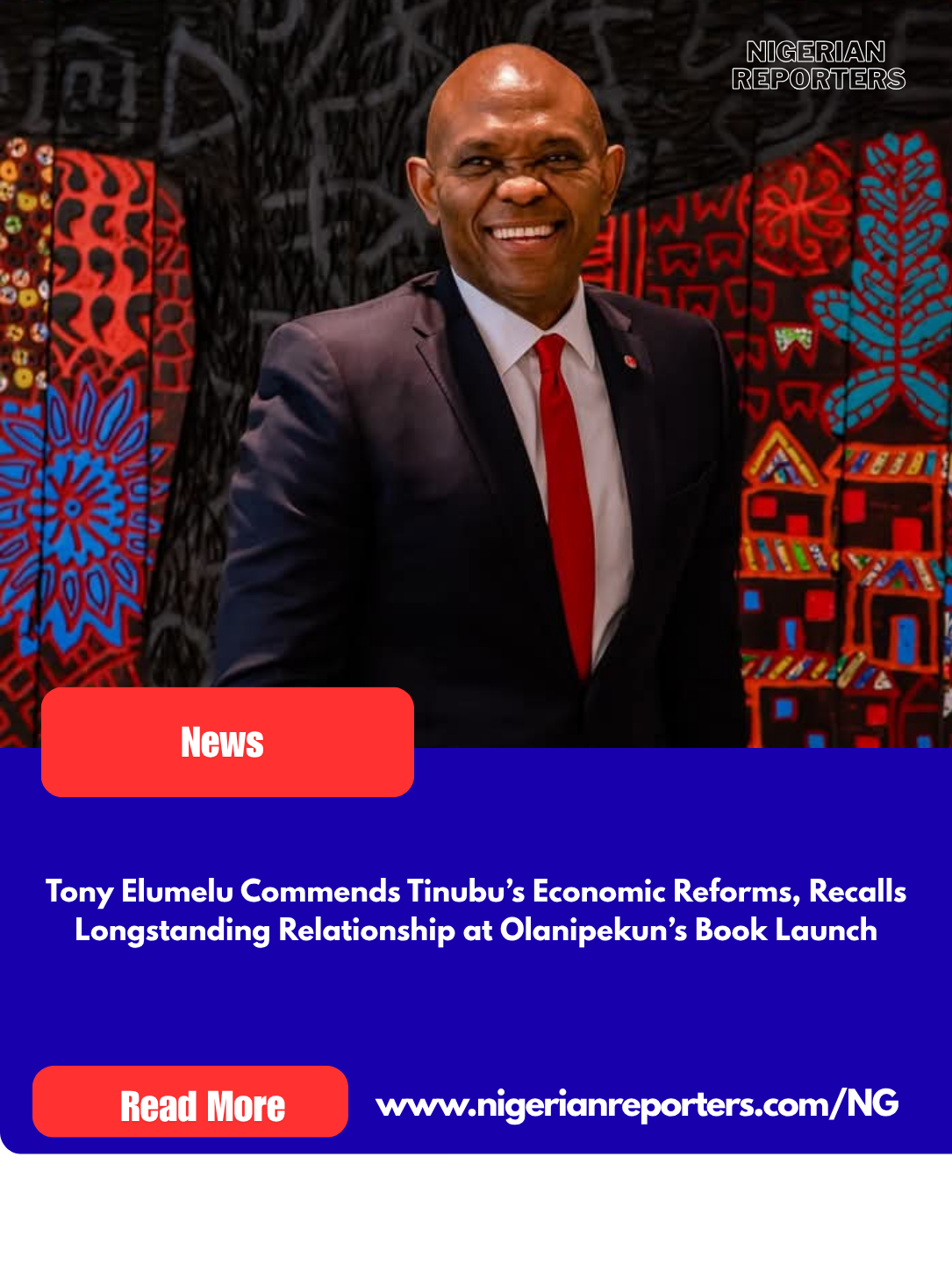
Billionaire businessman and Chairman of Heirs Holdings, Tony Elumelu, has commended President Bola Tinubu for taking what he described as bold decisions to address Nigeria’s economic challenges, including the removal of fuel subsidy, unification of the foreign exchange market and signing of the tax reform laws.
Elumelu spoke at the launch of a book by renowned legal practitioner, Wole Olanipekun, where he reflected on his longstanding relationship with Tinubu, dating back to the President’s days as a corporate treasurer at ExxonMobil.
Recalling their early encounters, Elumelu said he and other junior corporate bankers frequently visited Tinubu in his office, where he was known for his immaculate white shirts and signature suspenders.
“Mr President, where are those suspenders? We want to see them again,” he jokingly remarked.
He also recalled their relationship during Tinubu’s tenure as Governor of Lagos State, disclosing that the former governor gave him a piece of land shortly before leaving office to enable him to develop a major business complex near the Oriental Hotel.
Elumelu thanked Tinubu for the gesture, noting that their paths had continued to cross since he became President.
Assessing the Tinubu administration’s economic policies, the businessman said the government inherited an economy facing serious difficulties, characterised by a fuel subsidy bill that exceeded combined spending on health and education, multiple exchange rates that encouraged arbitrage, and a tax system that placed an unfair burden on compliant taxpayers.
He said Tinubu took difficult but necessary decisions by removing the fuel subsidy, unifying the exchange rate and signing the tax reform laws, despite facing stiff opposition.
While acknowledging that ordinary Nigerians had borne the burden of the reforms, Elumelu said the country could not build a sustainable economy on what he described as a foundation of unreality.
“I know the cost has been borne by ordinary Nigerians, and I know Mr President knows this, too. But I also know, as an entrepreneur, that an economy cannot be built on a foundation of unreality, and you ended that unreality,” he said.
Linking the administration’s reforms to the theme of the event, Elumelu argued that the policies also represented a demonstration of the rule of law.
According to him, the previous systems of discretionary subsidy allocation, non-transparent foreign exchange distribution and negotiated tax collection undermined fairness and accountability.
He said the reforms had brought an end to such practices, stressing the importance of transparent and predictable economic systems.